
 As someone who enjoys “trying” to speak foreign languages, I admit that my inner plant geek got me good when it comes to identifying plants by their botanical name. Common names are good, too. But, they can steer you wrong and can be very confusing.
The main reason you want to know the botanical (or scientific name) is because it’s accurate most of the time. Here’s an example. You want to order a tulip tree (common name) because one of your neighbor’s has one and you love it. So you go to your local nursery and have them order one for you, and when you come to pick it up, you see that they’ve got the wrong plant. Your tree was supposed to have rose pink flowers and this tree had bi-color white with yellow flowers. What happened?
This tree you called ‘tulip tree’ happens to be one of the common names for both Magnolia and Liriodendron. You wanted the Magnolia soulangiana (Saucer Magnolia) but instead, ended up getting the Liriodendron tulipifera. So you see how the common name can be inaccurate?
And that’s because there can be many different common names for the same plant. But only one botanical name! Bingo.

Last week I ordered numerous 1 gallon creeping fig vines from my nursery, but ordered them using their botanical name: Ficus pumila (see them packed happily in the truck).
I slept well that night, (not the norm). Especially because I knew that what I ordered would be the precise plant I’d pick up. Period! Accuracy matters, especially when client’s are counting on it.
Botanical Names are the Universal Language of Plants
It’s amazing to think that anywhere you travel in the world, “plant people” speak the same language. Botanical Latin is universally recognized as the language for naming plants. So – if you go to the botanical gardens in a non-English speaking country, (which I highly recommend!) you will see plant signage, which includes the plant’s botanical name.
Often, the name tag will include information about the plant such as: family, botanical name, common name and origin. This can be extremely helpful for the obvious reason that you can now learn more information about any particular plant of interest. Hmmm…. wonder if this shrub would do well in my garden?
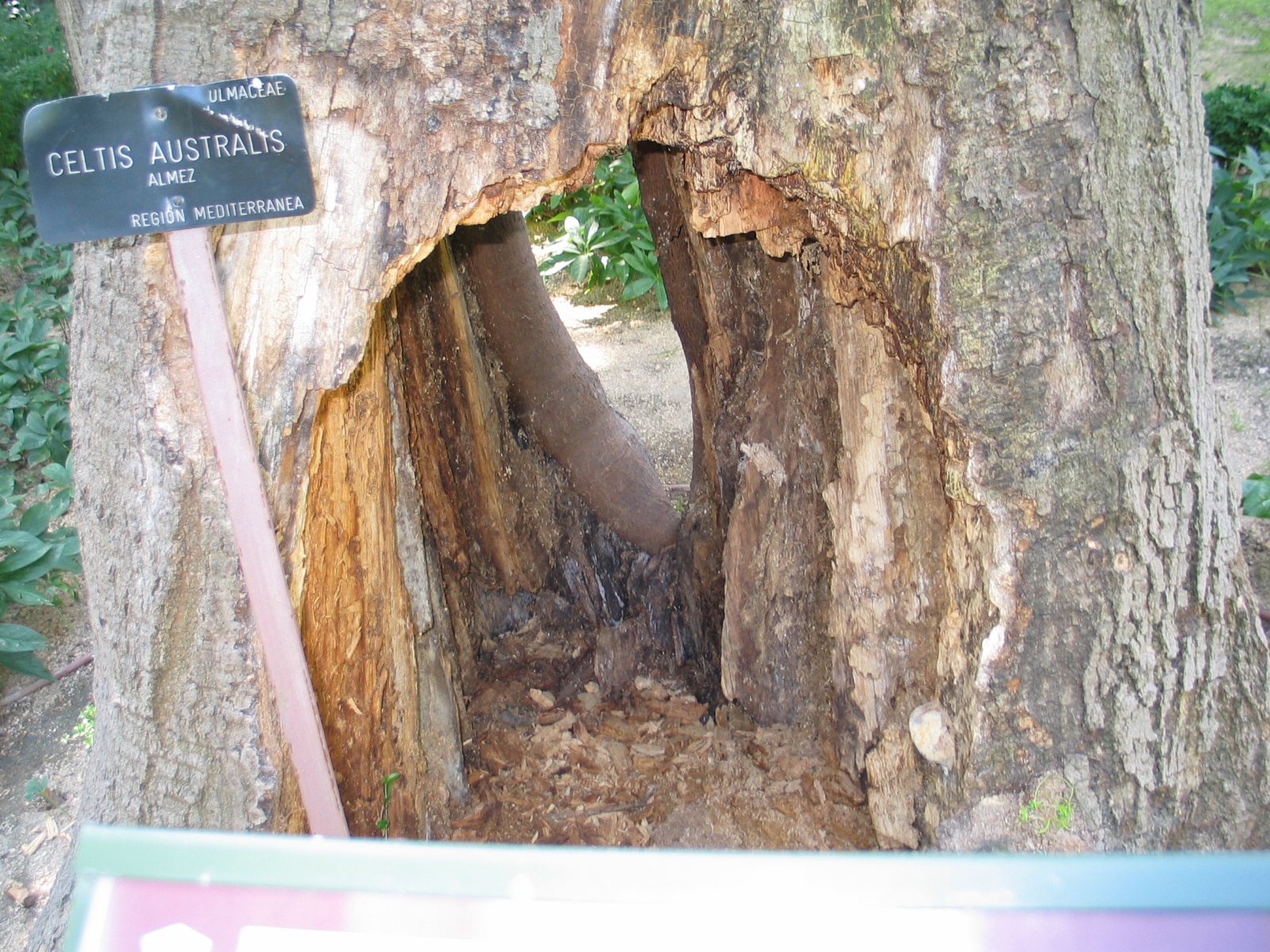 The photo to the left was taken at the Real Jardin Botanico in Madrid, Spain. Though the sign looks like it’s seen better days, as has the poor hollowed out tree, it’s a good example of what we’re talking about. The plant tag shows:
family: Ulmaceae
botanical name: Celtis australis (Universal)
common name: Almez (Spanish common name. We know it as hackberry)
origin: Region mediterranea
So, the moral to the story is that if you want to learn more about a particular plant, or to buy one, knowing the scientific/botanical name is important!

